

More options and less certainty
Upgrade pool dilution is a player description of difficulty finding a desired option after expanding permanent choices. The archived experiences show both the value of module variety and the frustration of missing a planned component. They do not establish exact selection weights or a universal probability formula.
Reviewed:
Upgrade pool dilution describes a practical frustration: after buying more options, the one you want may not appear when needed. It is not a confirmed mathematical formula in the supplied material.
Two gameplay observations explain the trade-off. One player recommends buying modules because a narrow pool limits build variety. Another plans a Ram build but never receives the Ram after unlocking more options. Both experiences can be true.
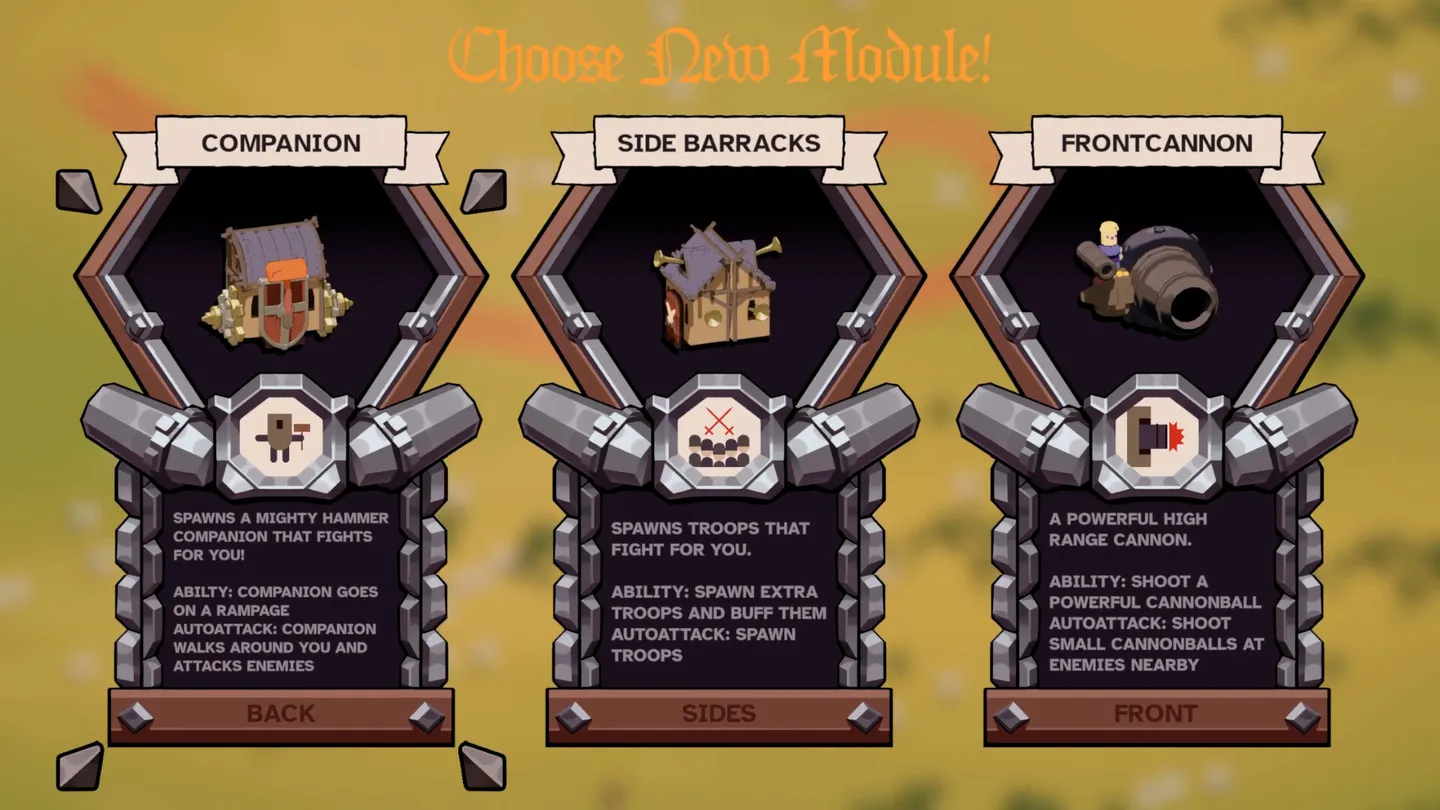
Balance variety against a specific run plan
| Goal | Sensible approach | Trade-off |
|---|---|---|
| Try more playstyles | Buy useful modules across new combinations | A particular desired choice may be less dependable |
| Complete one setup | Prioritize the missing compatible components | Fewer alternatives when the run offers something unexpected |
| Improve selection flexibility | Consider the permanent reroll thresholds | Buying unwanted items can delay the purchase you actually need |
Define what you mean by dilution
Players can use the same word for several different experiences. One player means that more new modules are eligible after permanent purchases. Another means that upgrades for several installed weapons compete with the improvement they want. A third means that artifact choices rarely support a focused build. Those experiences may all be frustrating, but they do not establish a single shared selection system.
Begin with a precise question: which option were you looking for, on which screen, with which equipment? A complaint that Ram never appeared in a new-module selection is different from a complaint that an installed weapon did not receive a desirable upgrade. The practical response differs too. The first involves access and equipment choices; the second involves how to strengthen the castle you already have.
This guide uses dilution as a planning concept, not a verified game formula. More eligible choices can make a particular plan feel less dependable, but exact conclusions require knowing how the game chooses options. Without that information, an apparently simple calculation can be misleading even if the number of owned modules is known accurately.
Check access before interpreting randomness
The archived Early Access advice explains that modules enter available choices through Silver unlocks. That makes permanent ownership the first useful check. An item displayed behind a completed challenge can still require a purchase. Use the module ownership and purchase checks to identify the item's actual state.
The next check is slot compatibility. A plan that expects a Side module must use a chassis with an appropriate slot. Spiderburg's different slot arrangement is a concrete example of why the vehicle matters. The game can offer a variety of configurations, but a purchase does not make every module fit every configuration. Rerolling cannot be treated as a way around a missing slot.
Then check whether the current screen even concerns a new module. If you are improving an existing one or choosing an artifact, the missing module name is not evidence that its new-module chance is low. These checks remove avoidable misunderstandings before you begin drawing conclusions about a system whose full eligibility and weighting rules are not confirmed here.
Why an expanded collection can still be useful
A narrow collection gives you fewer different ways to assemble a run. The player advice encouraging module purchases is about that limitation: new equipment creates opportunities to try other attacks and solve different problems. If your goal is to explore the game, a broader set of choices is a benefit even when it reduces your ability to expect one familiar selection.
Variety can also improve adaptation. When a planned component does not arrive, another usable module may supply coverage, a different firing angle, or an attack that suits the current situation. This does not mean every option is equally valuable. It means the value of an unlock depends partly on whether you understand how to use it and whether it fits the configurations you enjoy.
Purchasing only for a hypothetical perfectly controlled pool can postpone that learning. Conversely, buying everything immediately without reading its role can leave you with choices you do not know how to evaluate. The useful middle ground is deliberate expansion: buy an option because it completes a plan or creates another workable direction, and understand the trade-off before entering the next run.
Separate the core from the optional slots
A build plan becomes more flexible when you identify the part that makes it function. A summon-focused route might be defined by the friendly-unit module you can actually start with, while another position provides supporting fire. An arrow route might begin with an owned arrow-related module and accept variation elsewhere. These are examples of planning around a role, not promises that every listed option is always available at the start.
If the current loadout permits your essential component to be selected, that can remove one source of uncertainty. If it does not, ask whether the plan can survive until the component appears and what you will do if it never does. A plan that has no answer to the second question is fragile even if it performed well in someone else's completed run.
Write down an acceptable alternative before the first difficult selection. It should have a reason to work with the existing equipment, such as using a relevant bonus or filling an uncovered role. The starting loadout guide helps separate that essential role from flexible slots. The alternative needs enough attention to become a useful part of the castle you are actually driving.
Read the missed-Ram example carefully
The archived summon run begins with an intention to use Ram, but the player later says it never became available during that attempt. That supports a limited and useful conclusion: intending to assemble a build does not guarantee the game will offer the required part. It does not show a finished Ram build or establish how Ram performed when equipped in that run.
It also does not identify a numerical cause. The player discusses having many unlocks and wanting more rerolls, but the clip alone cannot reveal the selection weights or show what would have happened with a different account. Treat the comment as an observed frustration with a practical consequence, rather than upgrading it into a controlled experiment.
The response during a similar run is to use what arrived. If the castle is already functioning around barracks and another support module, improve those attacks and address their weaknesses. Keeping every future choice reserved for a missing component can waste the strength you could gain now. This is an adaptation recommendation, not proof that abandoning the original plan will always produce a clear.
Include the permanent reroll benefit in a purchase decision
Hotfix 0.9.10 changes the comparison between a narrow and a broad collection. Each complete group of six unlocked modules contributes an additional New Module Reroll, while each complete group of six unlocked artifacts contributes an Artifact Reroll. The reroll counter guide explains how to check the separate bonuses.
This does not settle the dilution question mathematically. More opportunities to choose can help, but the patch does not supply the probability of finding a specific item before and after a purchase. You would need more information about eligibility and weighting to compare exact outcomes. A precise-looking probability calculated from the owned-item count alone would overstate what is known.
Use the threshold as one consideration alongside purchase usefulness and cost. A module you want that also completes a group offers two clear reasons to consider it. An unwanted purchase that leaves the core unaffordable has a different trade-off. The additional roll remains an uncertain selection opportunity, so it should not automatically outrank a module that makes the next planned loadout possible.
Use rerolls with a stopping rule
Before rerolling, decide which outcomes would be good enough. A useful result can be a direct part of the original plan, an alternative that uses existing bonuses, or a choice that keeps the current attempt alive. Having several acceptable outcomes makes the decision easier to evaluate than insisting on one name regardless of the battlefield.
If the current selection already contains one of those outcomes, consider taking it. Rerolling a usable option trades a known benefit for another uncertain offer. That can be reasonable, but it is not automatically better merely because another attempt remains. A repeated habit of discarding acceptable choices can make a collection feel worse even without any change to the actual selection rules.
When none of the choices solves the identified problem, a roll has a clearer purpose. If the next selection still misses, update the plan rather than treating the number of previous misses as a guarantee that the next will succeed. No verified pity rule is established in this reference. Earlier disappointment does not provide evidence about an undisclosed corrective mechanism.
Compare runs without claiming more than they show
For a personal check, record the version, chassis, owned modules, installed equipment, and selection type. Note what you wanted and what appeared. Keeping those details makes your observations more useful than remembering only the run that felt unusually unlucky. Also record successful selections, since ignoring them would give a distorted impression of the experience.
Even with those notes, avoid turning a small sample into a complete drop table. A larger account can differ in many ways from a smaller one, and different run states may have different eligible choices. Without control over those differences, a before-and-after comparison can suggest a pattern without proving its cause. Report the actual observation and leave the hidden mechanism unresolved.
For ordinary play, you do not need to solve that statistical problem before making progress. Verify that the needed equipment is accessible, start with a reliable core when possible, buy options you can use, and keep an alternative in mind. Those actions address the practical frustration while preserving the difference between a useful strategy and a claim about the game's undisclosed mathematics.
Ownership and eligibility
The archived Early Access advice ties module availability to permanent unlock purchases. Before blaming randomness, check whether the desired module is actually owned and whether the intended chassis supports its slot. Completing a challenge and buying the resulting option can be separate events. Ownership alone still does not prove that every selection screen can offer the module.
Partially verifiedDifferent selection types
Selecting a new module, upgrading an equipped module, and choosing an artifact are distinct situations. A miss on one screen does not measure the odds of another. Record the type of choice before interpreting a streak, and avoid counting every visible icon as a member of one uniform pool. Neither the complete eligible set nor the weighting is established here.
Partially verifiedUnlocks also add rerolls
Hotfix 0.9.10 adds New Module Rerolls in groups of six module unlocks and Artifact Rerolls in groups of six artifact unlocks. A wider set of permanent options therefore also contributes named selection bonuses. The benefit does not guarantee a particular result, and the two categories should not be combined into one count.
ConfirmedPlan around acceptable alternatives
These planning routes show how to handle uncertainty before and during a run. They are not tested combat combinations, and no frame timings apply. A good fallback preserves useful investments in the equipment already present without pretending that a missing module will certainly arrive at the next selection.