
Unlock bonuses and selection counters
Hotfix 0.9.10 ties additional rerolls to permanent module and artifact unlocks. Use the named category and the corresponding selection screen when checking a bonus. This rule does not supply a universal total for every account, and it does not turn every type of reroll into a shared resource.
Reviewed:
Older advice that every account only gets one roll is incomplete. The progression rules changed in hotfix 0.9.10, and later gameplay notices additional rolls without identifying the exact patch.
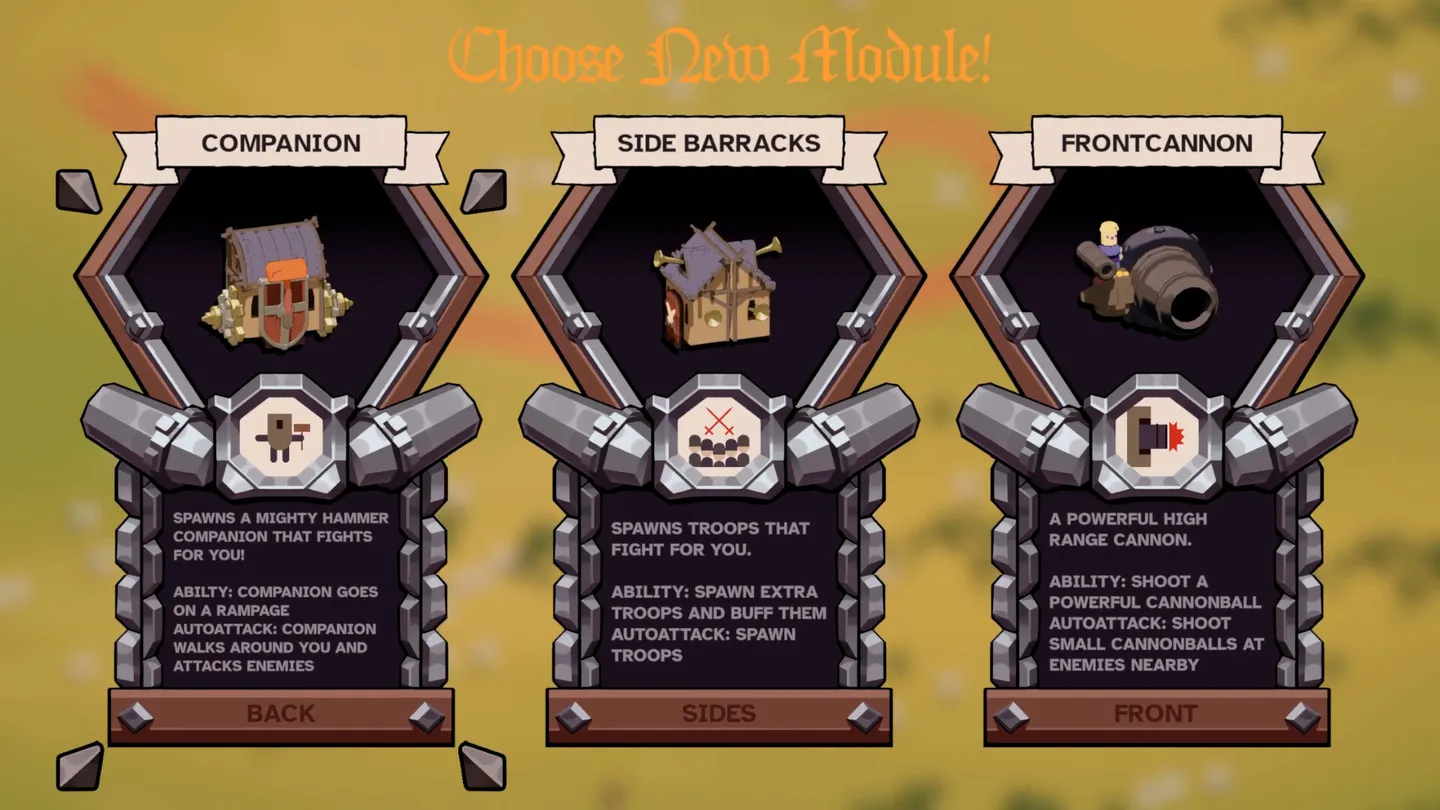
Use the named counter on the current screen. Choosing a new module, improving an existing module and choosing an artifact are different decisions.
Permanent Wanderburg reroll bonuses
| Permanent unlock group | Bonus stated in 0.9.10 | Do not assume |
|---|---|---|
| Every six unlocked modules | One additional New Module Reroll | That every module-upgrade screen gets an extra roll |
| Every six unlocked artifacts | One additional Artifact Reroll | That this also changes new-module choices |
Calculate the unlock bonus without inventing a starting total
Count complete groups within each category. A partial next group does not complete another threshold. This arithmetic describes the progression bonus, not every other source that can affect the counter in a particular run.
For example, imagine an account with twelve qualifying module unlocks and six qualifying artifact unlocks. The rule contributes two additional new-module rolls and one additional artifact roll. It does not contribute three rolls that can be spent anywhere. Equally, an account with five in each category has not completed a six-item group by adding the two categories together. These are explanatory examples, not claims about the starting inventory of a new account.
The baseline total and the exact treatment of every possible default unlock are not documented in the material used here. Use the in-game count to establish the actual total for your account. If you want to check the progression effect, compare the same named screen before and after a qualifying change, rather than comparing an artifact reward in one run with a new-module screen in another.
Decide what a successful roll would look like
Before pressing the reroll control, name the result you need. It might be a compatible module for an open role, an upgrade to the attack doing most of the work, or an artifact that supports the equipment already installed. A goal defined this way can have several acceptable answers. A goal defined only as a particular color or exact card is more likely to consume attempts without improving the run.
Look at every option currently offered before deciding none is useful. A secondary weapon upgrade can help if that weapon is keeping enemies out of your escape route. A defensive choice can matter when you have enough damage but cannot survive between attacks. These judgments depend on the current castle. The guide does not assign a universal rarity threshold below which every choice should be discarded.
Once a roll produces an acceptable option, reconsider before rolling again. The fact that a better card might exist does not mean another attempt is the best use of the remaining resource. You are choosing between a benefit you can already take and an uncertain next selection. The right stopping point is connected to the run's need, not to the amount of unused rerolls you feel obliged to spend.
New-module rolls should support a usable castle
A new-module decision changes the equipment available to the run. That makes slot compatibility and function especially important. The desired module must fit the chassis, and the plan should make sense with what is already installed. An attractive Side module is not a solution for a chassis without that slot. Repeated attempts cannot repair a mismatch between the planned equipment and the selected vehicle.
Distinguish an essential component from an optional improvement before you start. If the loadout allows the essential component to be selected at the beginning, doing so can reduce dependence on later offers. If you are relying on finding it during the run, prepare an alternative role that an available module could fill. Extra rolls give you more chances to adapt, but the patch does not promise the desired name will appear.
The archived run that planned to use Ram but never received it demonstrates this limit. It is evidence that a plan can fail to assemble, not evidence for an exact Ram drop rate. A useful response is to strengthen the modules you did receive. Continuing to select upgrades for an imagined future component can leave the present build weaker while the next choice remains uncertain.
Artifact rolls should match the equipment already present
An artifact that supports a damage family can be valuable when several working components benefit. The recorded arrow gameplay uses rerolls while looking for arrow support, which illustrates a coherent reason to reject unrelated choices. It does not establish a guaranteed sequence of artifacts, nor does it prove that an offensive artifact is always preferable to recovery or another useful effect.
Read scope words closely. An effect may describe a particular damage type, a module position, an active ability, or a trigger involving something you do during combat. Those differences matter. A card whose trigger rarely occurs in your present setup can contribute less than its headline suggests. Do not assume that every effect associated with the same icon applies to every weapon in the castle.
The recorded gameplay also contains choices that strengthen a later or earlier artifact. That creates an additional reason to understand the next decision, but it does not remove uncertainty from the roll. If the desired follow-up fails to appear, evaluate the available options on their actual effects. A planned combination is still a plan until all necessary parts have been selected and their interaction is confirmed.
Upgrade rolls should target a real shortage
An upgrade selection concerns equipment you are already improving. The first question is what that equipment lacks. If a core active attack lands but leaves the boss alive, an offensive improvement may help. If the attack is usually unavailable, cooldown may be worth examining. If it misses because of your angle, repeated rolls for damage can spend resources without fixing the cause of the miss.
A challenge objective can also give an upgrade roll a clear purpose. In the recorded Side Cannons example, the player is pursuing an individual module level associated with Front Cannon access. Selecting a relevant upgrade supports that goal. This does not make the same priority correct for every run, especially if your immediate objective is a first clear with a different weapon.
Keep this separate from the permanent six-module rule. The official wording names New Module Rerolls. Gameplay mentions additional upgrade rerolls through artifact effects, but the existence of those effects does not make the two counters interchangeable. A claim that all upgrade screens gain an extra roll from buying six modules would go beyond the confirmed patch wording.
Diagnose a missing bonus step by step
First identify the exact game version and the exact screen. If you are using older footage to estimate your total, stop treating its count as a current baseline. Early Access progression changed, and a player saying they have one roll in one clip is only describing that observed situation. It cannot override the later official unlock rule.
Next inspect the permanent category involved. A displayed challenge completion, an available purchase, and an owned item are different states in the progression interface. Check what the current client calls unlocked and whether the Silver purchase has been completed. Keep captains, crews, and vehicles out of a count intended for modules or artifacts. This prevents a category error from looking like a broken bonus.
Finally, compare like with like. Write down the relevant count and any active artifact effects, then observe the corresponding selection counter. If a mismatch remains, that gives you a specific issue to describe: the version, the category count, and the counter involved. There is no need to delete a save, reinstall the game, or make additional purchases merely to guess which part of the comparison was wrong.
Distinguish an exhausted counter from a stuck selection
A screen with no remaining attempts is a different problem from a screen that stops responding. Hotfix 0.9.10 specifically fixed a softlock on the Rare Artifact screen. That confirmed bug matters when comparing older reports: a player unable to continue a selection may have encountered a progression blocker rather than simply run out of rerolls.
Before spending more Silver to address such a problem, check whether ordinary selection still works. If you can choose a card but cannot refresh the offers, read the remaining counter and applicable effects. If neither selecting nor continuing works, note the screen title, version, and the action immediately before it stopped. Those observations distinguish an unavailable action from a frozen decision screen.
The patch entry does not mean every later selection problem has the same cause. It also does not imply that unlocking six more artifacts fixes an unresponsive interface. Use the crash and freeze checks when the client stops accepting the expected input, and keep that diagnosis separate from planning how many attempts the account should receive.
Balance a threshold purchase against the missing core
Suppose you are close to another module threshold but still need a particular module for the next loadout. The useful comparison is between buying an option you can use now and spending toward a roll whose outcome remains uncertain. Crossing the threshold can be helpful when the purchase also expands your workable choices. It is less persuasive when it leaves the one necessary component unaffordable.
This is an opportunity-cost decision rather than a universal rule to avoid unlocks. Buying modules is also how you gain build variety. If your aim is to experiment, a broader pool can be a benefit in its own right. If your aim is one narrow challenge, the same Silver may be better directed toward the components that make that attempt possible. The reroll bonus is part of the decision, not the only reason to buy.
After the purchase, return to the actual loadout and check what changed. Confirm ownership, compatibility, and the matching counter when it appears. Then update the fallback you will accept during the run. This connects permanent progression to a concrete play decision and avoids treating an extra roll as a promise of a completed build.
Use module unlock priorities for the purchase decision, upgrade pool dilution for a fallback plan, and module upgrades to identify the attack a card changes.
Every six module unlocks
The 0.9.10 progression change grants one additional New Module Reroll for each group of six unlocked modules. Count the module category separately from artifacts, captains, crews, and vehicles. This is an additional bonus attached to the named selection type; it is not a statement that a player has only one total roll or that every ordinary upgrade selection receives the same addition.
ConfirmedEvery six artifact unlocks
The same patch grants one additional Artifact Reroll for each group of six unlocked artifacts. The relevant total is the artifact category, not the sum of everything bought with Silver. A module purchase cannot be substituted for an artifact in this rule. Additional effects encountered during a run still need their own descriptions checked.
ConfirmedTemporary effects have their own scope
An artifact effect may refer to artifact rerolls, upgrade rerolls, or other selection behavior. Read the exact nouns before accepting it. A luck choice is not the same action as gaining another attempt, and an effect on upgrades does not establish a permanent increase in new-module rerolls. Treat the displayed counter as a separate observation for each screen.
Partially verifiedA reroll decision sequence
These entries describe decisions at selection screens. They are not ability combinations and have no measured frame timing. Work from the current selection toward an acceptable outcome, with a stopping rule established before spending rolls. The point is to finish a useful build, rather than to exhaust every available attempt.